
The Word "Just" Is Quietly Undermining You
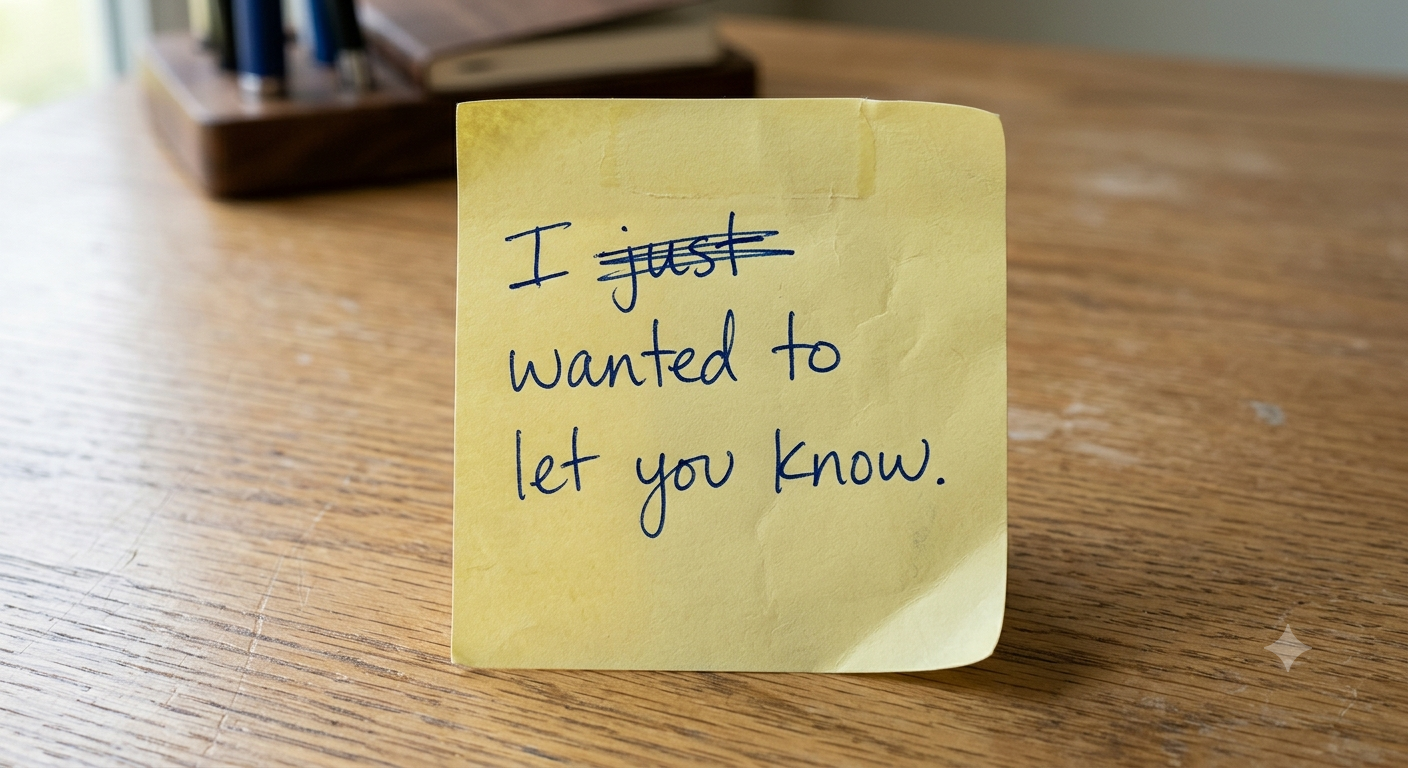
It shows up in emails before a request. It appears in messages where someone is asking for a favor, pitching an idea, or following up on something important. It is small enough to overlook and common enough to feel completely normal.
The word is "just," and it is doing more damage to your professional writing than you probably realize.
What "just" is actually doing
On the surface, "just" sounds polite. It softens a request. It signals that you are not trying to be demanding or difficult. That instinct is not wrong. The problem is what the word communicates underneath the surface.
"Just" minimizes. It shrinks whatever comes after it. When you write "I just wanted to follow up" or "I just have a quick question," you are signaling to the reader that what you are about to say is small, possibly inconvenient, and not entirely worth their time.
You wrote it to be considerate. It reads as apologetic.
That distinction matters a great deal in professional communication, where the way you frame a request shapes how seriously it is taken.
Where it shows up most
Look at these examples and notice what changes when the word is removed.
I just wanted to check in on the proposal. versus I wanted to check in on the proposal.
I just thought this might be useful for your project. versus I thought this might be useful for your project.
I'm just reaching out because I had a question about the timeline. versus I have a question about the timeline.
Just let me know if this works for you. versus Let me know if this works for you.
In every case, removing "just" makes the sentence more direct, more confident, and no less polite. Nothing is lost except the hesitation. The reader's experience of the message changes noticeably.
Why people use it anyway
"Just" became a verbal reflex for the same reason most softening language did. People, particularly in professional environments, are trying to manage how they come across. They do not want to seem pushy, entitled, or like they are overestimating the importance of their request.
That concern is legitimate. Tone matters in written communication, and coming across as demanding is a real risk worth avoiding.
But softening language and undermining language are not the same thing. Polite does not require apologetic. You can be considerate and direct at the same time. In fact, that combination is exactly what confident professional writing looks like.
"Just" is not the only word doing this
Once you start noticing "just," you will start seeing its relatives everywhere.
"Actually" often signals that the writer is bracing for pushback before the reader has even had a chance to react. "Sorry to bother you" hands the reader permission to dismiss the message before they have read it. "This might be a silly question, but" announces lack of confidence before the question is even asked.
These words and phrases have the same job as "just": they preemptively apologize for taking up space. In small doses, they can read as appropriately humble. As a pattern, they signal that the writer does not fully believe in what they are saying.
Readers pick up on that, even when they cannot articulate why.
What to do instead
The fix is simple, even if the habit takes time to break.
Go back through your last few professional emails and search for the word "just." Read each sentence with it, then read it again without it. In almost every case, the version without it is stronger.
Then do the same for its cousins. Look for phrases that apologize before the message even starts. Look for language that shrinks the ask before anyone has said no.
Replace the reflex to minimize with the habit of simply saying what you mean. You can still be warm. You can still be considerate. You can acknowledge the reader's time without treating your own message like an inconvenience.
Confidence is a writing skill
Authority in writing does not come from using bigger words or longer sentences. It comes from trusting that what you have to say is worth saying, and writing accordingly.
"Just" is a small word. But so is every other habit that quietly chips away at how your communication lands. The writers who get taken seriously are not always the ones with the most impressive vocabulary. They are the ones who have stopped getting in their own way.
Remove the word. Trust the message. See what happens.